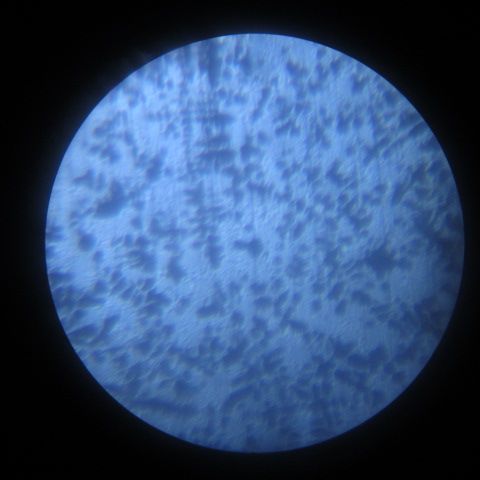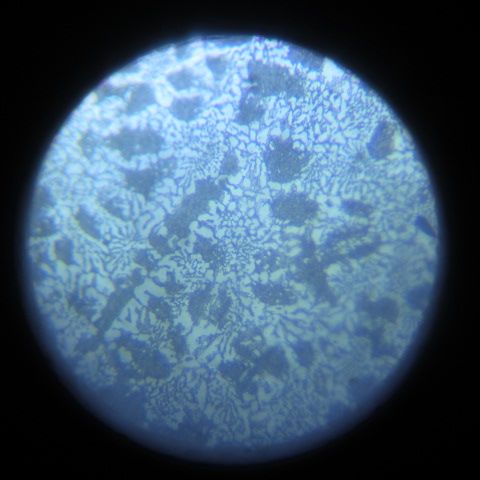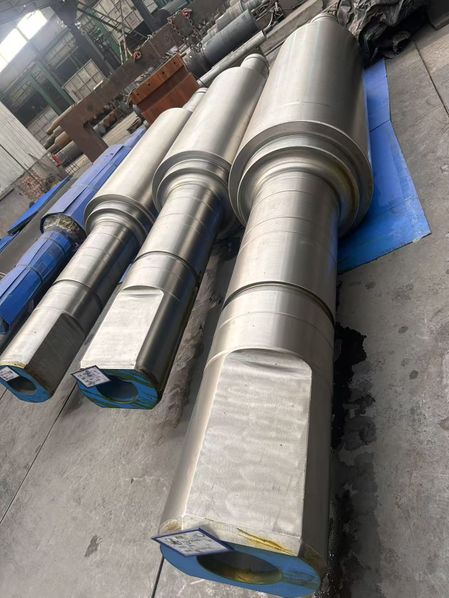
Standard and improved high-Cr compound cast iron rolls are produced by horizontal centrifugal casting. The chromium content of the working layer is 12%~22%; the working layer contains no graphite, and performance depends on the matrix properties and the content of abundant Cr carbides (25%~35%).
Improved Technical Features
- Addition of V or W produces solid-solution strengthening and dispersion hardening, improving roll wear resistance and high-temperature red hardness.
- V carbides and nitrides act as foreign crystallization nuclei during solidification, inhibiting grain growth and chromium-carbide grain-boundary migration and refining the microstructure.
- Eutectic carbide morphology and distribution are improved, transforming from elongated, flake-like, sharp shapes to flattened spheroidal and short, thick rod shapes that are uniformly distributed.
- Strong carbide-forming elements such as Nb, V and W form high-hardness, high-melting-point, fine and uniformly distributed MC-type and M2C-type carbides.
Performance Improvement
Based on these differences and characteristics, improved high-Cr cast iron rolls offer 15%~50% higher overall in-service performance and service life than standard high-Cr cast iron rolls.
Main Application Scope
- Work rolls for front finishing stands of hot wide strip mills
- Work rolls for roughing stands of medium and heavy plate mills
- Work rolls for roughing stands of Steckel mills